Discord, SoundCloud, and a Ring Light: How the New Generation of Artists Is Making Radio Chase Them
Not long ago, the path to radio airplay was pretty well-mapped. You signed with a label, the label pitched to program directors, program directors added you to rotation, and listeners eventually heard your name. It wasn't fast, and it wasn't cheap, but it was the pipeline.
That pipeline still exists. But a whole generation of artists has decided they don't need it — and they're proving it in real time.
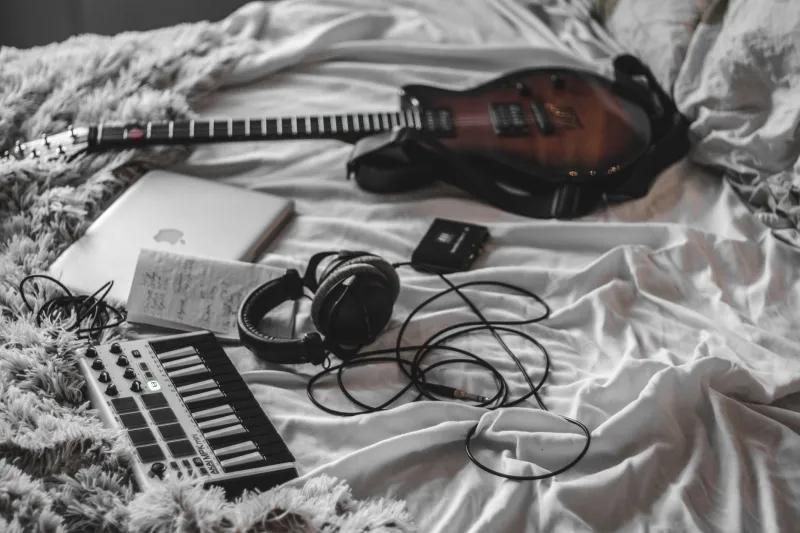
We're talking about artists who are building fanbases of tens of thousands of people inside Discord servers, racking up millions of plays on SoundCloud before they have management, and going viral on TikTok with recordings made on a laptop and a $40 condenser mic. By the time the traditional industry notices them, they've already got a community that buys merch, shows up to shows, and streams obsessively.
For radio stations, this creates an interesting problem. The old discovery methods — label relationships, industry showcases, trade chart tracking — don't always catch what's actually moving. And if you're not finding it, you're behind.
At Star 94, we've been paying attention. And we've had to get creative about how we listen.
The Old Pipeline Wasn't Built for This
To understand why this shift matters, it helps to understand what the traditional radio discovery process actually looked like — and what it was optimized for.
Label promotion teams existed specifically to interface with radio stations. They tracked chart positions, arranged station visits, provided early access to singles, and built relationships with program directors over years. It was a relationship-based industry, and it worked reasonably well when the music industry itself was a relatively closed system.
The internet didn't just open a side door to that system. It blew out the walls.
Suddenly an artist in Tulsa could post a voice memo to SoundCloud and wake up the next morning with 50,000 plays from listeners in Atlanta, Chicago, and Los Angeles who found it through a Reddit thread or a playlist a stranger made at 2 a.m. No label. No promotion budget. No industry connection required.
The artists who figured this out early didn't just find a workaround — they built a completely parallel system. And some of them built it so well that by the time labels came calling, they were negotiating from a position of leverage rather than desperation.
Where the Real Momentum Is Building
If you want to understand where Gen Z music culture actually lives, you have to go where the conversations are happening. And increasingly, that's not on the platforms that radio has traditionally monitored.
Discord has become one of the more underrated music discovery engines on the internet. Artists build servers around their work, and the fans inside those servers are not passive listeners — they're active participants. They give feedback on unreleased tracks, help crowdfund projects, organize streaming parties to boost numbers on release day, and function essentially as a street team that operates 24 hours a day across every time zone. An artist with 8,000 Discord members can have more real cultural impact than one with 200,000 passive social media followers.
SoundCloud never died, despite years of obituaries. It remains the platform where raw, unpolished, genuinely experimental music gets posted first — and where listeners who are actively hunting for something new go to find it. The comment culture on SoundCloud is its own thing: listeners timestamp their reactions directly on the waveform, creating a running conversation about the music that plays out in real time.
TikTok is more visible, but the discovery mechanism there is still underestimated by traditional industry players. It's not just about sounds going viral — it's about artists building parasocial relationships through consistency. An artist who posts three times a week, shows their process, responds to comments, and builds a personality around their music can accumulate a genuinely devoted following before they've released a proper single.
How Star 94's Programming Team Adapted
We sat down with members of our programming and music discovery team to talk about how their process has evolved — and the candid answer was that it had to.
"There was a period where we were hearing about artists from our listeners before we'd ever seen them on a chart," said one of our music directors. "Someone would call in and request a song, and we'd look it up and find this massive SoundCloud following that none of our traditional tracking tools had flagged. That was a wake-up call."
The response wasn't to abandon the relationships and processes that still work — label pipelines still matter, and established chart tracking still catches a lot of what's moving. But the team started building out what they describe as a secondary discovery layer: actively monitoring playlist culture on streaming platforms, following tastemaker accounts on social media, and paying attention to what's being talked about in online communities that skew younger.
"We added TikTok to our regular Monday check-ins," said another team member. "Not just looking at what's trending on the main feed, but looking at what's trending in specific subcultures — bedroom pop, hyperpop, whatever's moving in the alternative corners of the app. Sometimes that stuff stays niche. But sometimes it crosses over, and we want to be ahead of it when it does."
The team has also started leaning more heavily on listener input as an early signal. Star 94's social channels and request lines aren't just engagement tools — they're a feedback mechanism. When multiple listeners start asking about the same artist or the same track, that's data worth acting on.
The Artists Who Didn't Wait for Permission
The stories coming out of this new landscape are genuinely remarkable. Artists who built their entire careers from their bedrooms before anyone in the traditional industry gave them a second look. A singer-songwriter in Ohio who grew a Discord community of 12,000 fans before her first label meeting. A producer in Atlanta who had already licensed beats to indie artists across three continents before he turned 21. A duo from the Pacific Northwest who built a Patreon with 4,000 supporters and used it to fund their debut EP entirely independently.
What these artists share isn't just hustle — it's a different relationship with their audience. They didn't grow up thinking of fans as the end result of a marketing campaign. They grew up thinking of their community as collaborators, early adopters, and co-owners of something they were building together. That changes how they make music, how they release it, and how much leverage they have when the industry eventually comes to them.
For radio, the challenge is that these artists often don't need traditional airplay the way previous generations did. Airplay is nice, but it's no longer the only path to reach. Which means radio has to offer something else — context, credibility, the experience of hearing a song alongside a curated listening environment — to stay relevant to both artists and audiences.
What This Means for You as a Listener
If you're a Star 94 listener, this evolution is actually good news. It means the music we're bringing to your ears isn't filtered exclusively through industry gatekeepers anymore. It means we're out there looking in the same places you are — the playlists, the servers, the comment sections — trying to find what's actually resonating before it becomes obvious.
The goal has always been to be the station that plays the song before it's everywhere. That job just requires a lot more tabs open than it used to.
And honestly? We're into it.