No Label, No Problem: The DIY Artists Who Earned a Spot in Star 94's Rotation
Not long ago, getting your music on a station like Star 94 required a very specific checklist: signed to a major (or at least a well-connected indie) label, backed by a promotional budget, and blessed by a handful of gatekeepers who decided what America got to hear. That checklist is getting shorter by the year — and honestly, we're here for it.
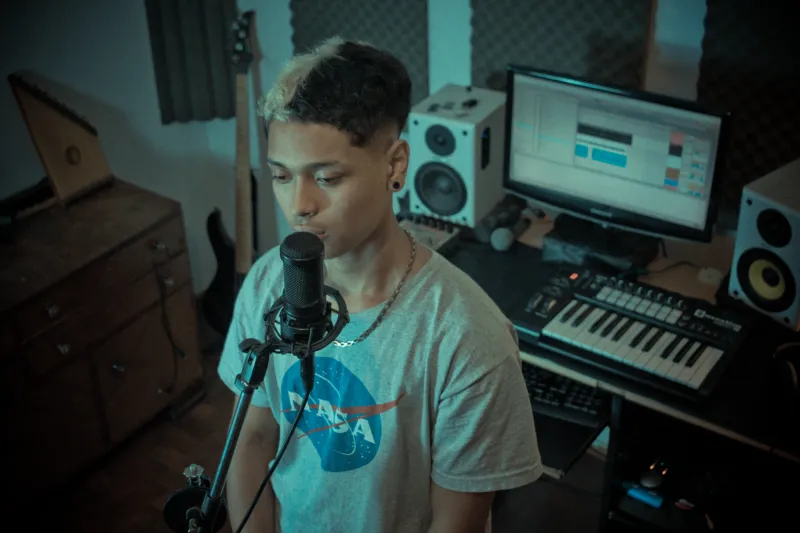
The modern pop landscape has quietly undergone a revolution. Artists are recording full-length albums on laptops, mixing tracks in closets lined with moving blankets, and releasing music directly to streaming platforms without ever setting foot in a traditional recording studio. And some of them? They're genuinely incredible.
Here's how it's happening, who's doing it, and why Star 94 is paying close attention.
The Bedroom Studio Is Now a Real Studio
Let's start with the tools, because the democratization of music production is the foundation of everything else.
A decade ago, professional-quality recording required access to gear that cost hundreds of thousands of dollars and the expertise to use it. Today, a producer with a decent laptop, a $200 audio interface, a condenser mic, and a copy of GarageBand or Ableton can create a track that holds its own against major label releases. Plugins that once ran on dedicated hardware now exist as software you can download for free. Online tutorials on YouTube have replaced expensive music school tuition for an entire generation of producers.
The result is a massive influx of high-quality music coming from artists who never had to ask anyone's permission to make it. They write, produce, mix, and master their own work. They design their own cover art. They build their own social media presence. And increasingly, they're landing on playlists, charts, and — yes — radio rotations.
Meet the Artists Making Noise
We've been actively scouting independent artists whose work genuinely moves us, and a few names keep rising to the top of our conversations here at Star 94.
Maya Solène is a 24-year-old singer-songwriter out of Atlanta who's been releasing music independently since she was 19. Her sound sits somewhere between early Taylor Swift and Gracie Abrams — confessional, melodically sharp, with production that sounds expensive but was built entirely in her apartment. Her latest single found its way to our music director through a listener tip (more on that in a second), and after one listen, it was a pretty easy call. "She writes like someone who's already been through a lot and figured out how to laugh about it," our morning show host said. "That's rare at any age."
DeShawn Okafor, a 27-year-old producer and vocalist from Chicago, operates under the name Okafor Blue. His music blends contemporary R&B with pop sensibility in a way that feels fresh without being alienating. He's been building a following on Spotify and Instagram for about two years, and his stream counts have been climbing steadily without a single dollar of label promotional spend behind them. Just word of mouth, playlist placements, and a loyal fanbase that genuinely evangelizes his music.
Priya Nair, based out of Los Angeles, makes synth-pop that sounds like it was beamed in from 1985 but somehow still feels completely current. She's been compared to Carly Rae Jepsen and Chappell Roan — artists who occupy that sweet spot between cult favorite and mainstream accessibility. Priya handles everything herself, including her own music videos, which she shoots on a mirrorless camera and edits on her laptop.
These aren't anomalies. They're examples of a much larger wave.
"I Found Them on Star 94 Before Anyone Else Knew"
One of the best parts of programming music from emerging independent artists is watching listeners discover them in real time. We've heard from a bunch of you about exactly that.
Jamila from Phoenix told us she was driving home from work when she caught one of Maya Solène's tracks during our evening show. "I literally pulled over to Shazam it," she said. "And then I spent the whole rest of the drive listening to her back catalog. I felt like I'd found a secret."
That sense of discovery — of being in on something before it's everywhere — is something we genuinely try to cultivate at Star 94. Radio has always had the power to be the place where people first encounter an artist who changes their life a little. That doesn't have to stop just because the music industry has shifted.
Marcus from Denver wrote in to say he'd been following Okafor Blue on Instagram for months before hearing him on our station. "When you guys played him, I texted four people," he said. "It felt like he'd made it, you know? Like it was official."
That reaction — that feeling of validation for an artist a listener already loved — is one of the most meaningful things a radio station can do in 2025.
What Makes an Independent Artist Star 94-Ready
We get asked this a lot, so let's be honest about it. It's not a checklist. There's no minimum stream count or follower threshold that automatically gets a track into rotation. What we're really listening for is the same thing we've always listened for: does this song make you feel something?
Beyond that, production quality matters — not in a "must sound like it was recorded at Capitol Studios" way, but in a "can we play this at full volume and have it hold up" way. Most bedroom producers working today can clear that bar.
We also look for artists who have a genuine voice. The independent space can sometimes produce music that's technically competent but sonically generic — tracks that could have been made by anyone, and kind of sound like it. What sets the artists we're excited about apart is a specificity to their perspective. You hear their personality in the production choices, the lyrical details, the way they phrase a melody.
The Gatekeepers Aren't Gone — They Just Work Differently
It'd be overstating it to say the music industry is now a pure meritocracy. Barriers still exist. Independent artists still face challenges around distribution, sync licensing, live booking, and simply getting heard above the noise. Having money helps. Having connections helps. None of that has changed entirely.
But the nature of the gatekeeping has shifted. The question used to be: can you get a label to believe in you? Now it's: can you get listeners to believe in you first? That's a more democratic question, even if it's still not an easy one to answer.
At Star 94, we want to be part of the answer. Our listeners trust us to bring them music that matters, and increasingly, that music is coming from artists who built everything themselves. We think that's worth celebrating — loudly, and at full volume.