What the Dark Asks For: Inside Star 94's Late-Night Listening Universe
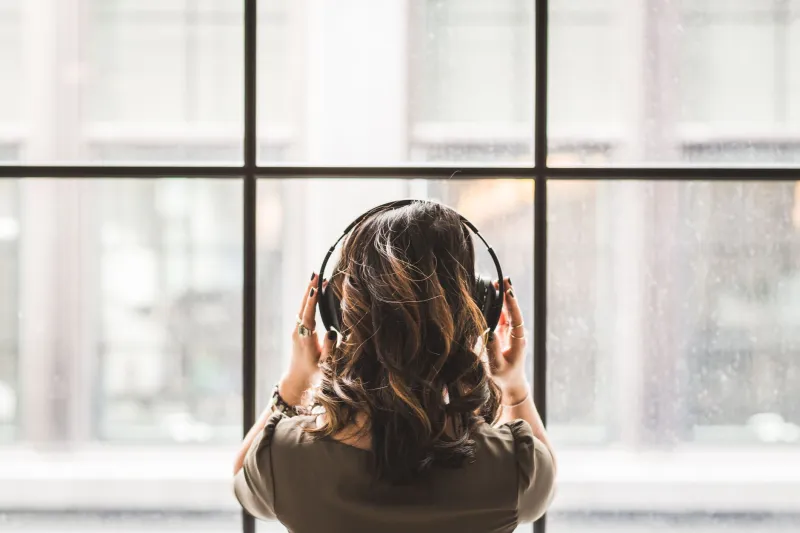
Somewhere in Ohio, a nurse named Denise is forty minutes into her third overnight shift this week. She's got her earbuds in, the unit is quiet for now, and she's scrolling through Star 94's late-night stream. She's not looking for energy. She's not looking for a hype anthem. She wants something that acknowledges the specific weight of 3 AM — not sad, exactly, but honest. Something that sounds like it understands.
Across the country in Phoenix, a rideshare driver named Marcus has the radio on low while he waits for his next ping. He's been driving since 10 PM. He'll probably go until 5. He wants something that keeps him company without demanding too much of him.
And in a studio apartment in Chicago, a college student named Priya is three hours into an essay that's due at 8 AM. She needs something that keeps her brain moving without distracting her from the work.
Three different people. Three different versions of the same hour. And all of them listening to radio in a way that daytime programming almost never accounts for.
The Audience Nobody Talks About
Radio programming has historically been built around peak drive times — morning and afternoon commutes, when the largest number of listeners are tuned in simultaneously. That makes sense from a ratings and advertising standpoint. But it's created a blind spot: the assumption that late-night listeners are just a smaller version of the daytime audience, wanting the same things at lower volume.
They're not.
Star 94's overnight streaming data tells a genuinely different story. Between 11 PM and 5 AM, listener behavior shifts in measurable ways. Skip rates change. Song completion rates climb — meaning late-night listeners are more likely to let a song play all the way through rather than jumping to the next track. Search activity spikes around certain artists and genres that perform modestly during the day but become unexpectedly dominant after midnight.
"The late-night listener is more patient," says one of Star 94's overnight programmers, who has been building after-hours sets for nearly a decade. "They're not driving to a meeting. They're not trying to get pumped up. They have time, and they're using music differently — more intentionally, in a way."
What the Data Actually Shows
Without getting too deep into proprietary numbers, the broad patterns in Star 94's late-night listening are striking.
Slower tempos perform significantly better after midnight than they do during peak hours. Not slow in a sad or depressing way — more like mid-tempo tracks with space in them. Songs that breathe. Songs where you can hear the room.
Lyrically, late-night listeners gravitate toward honesty over aspiration. Daytime pop often sells a fantasy — the party, the glow-up, the summer. After midnight, listeners seem to want something more grounded. Songs about real things: complicated relationships, the feeling of being in between chapters of your life, the specific loneliness of being awake when everyone else isn't.
Interestingly, late-night listeners also show higher engagement with longer tracks. While the streaming era has pushed average song lengths down toward the two-and-a-half-minute mark, after-hours listeners are more likely to complete — and replay — tracks that run four minutes or longer. There's something about the late-night headspace that allows for more immersion.
"People are less distracted," says a music behavior researcher who studies time-of-day listening patterns. "The cognitive load of the day has dropped. They can actually listen to a song, not just hear it."
The DJs Who Live in the Dark
Building a late-night set is a different craft than programming morning drive.
Our overnight DJ — who goes by the name Midnight Atlas on air — describes the late-night listener as someone who requires a particular kind of respect. "You can't be too loud. You can't be too cheerful. You can't do the big announcer voice at 2 in the morning — it feels wrong, like someone turned the lights on too fast," they explain. "But you also can't disappear. People listening at 3 AM are often alone, and the radio is company. You have to be present without being intrusive."
The music selection process for overnight hours at Star 94 involves pulling from the main rotation but applying a different filter. Songs that work during morning drive often don't survive the late-night edit. Tracks that might be considered "too slow" or "too mellow" for peak hours sometimes become anchors of the overnight set.
"There are songs in our library that I genuinely believe are better at 2 AM than at any other time of day," Midnight Atlas says. "The production choices the artist made — the reverb, the space, the way the vocals sit in the mix — it all makes more sense when the world is quiet."
The Listeners Speak
We asked Star 94's overnight audience to share what they're looking for, and the responses were consistent in ways that were almost poetic.
"Something that doesn't pretend everything is fine, but doesn't make it worse either." — warehouse worker, Memphis
"Music that sounds like it was made at the same hour I'm hearing it." — long-haul trucker, somewhere in Kansas
"Honestly? I just want to feel less alone. The right song does that." — new parent, San Diego
There's a recurring theme in these responses: the late-night listener isn't tuning in to be entertained in the traditional sense. They're looking for accompaniment. Something to sit with them in the quiet.
After-Hours Radio as Its Own Subculture
What's emerged in recent years — accelerated by streaming, which allows people to engage with radio content on demand regardless of their time zone or schedule — is something that looks a lot like a subculture.
Late-night listeners share recommendations with each other in online communities. They develop strong parasocial relationships with overnight DJs who feel accessible in a way that peak-hour personalities don't always. They create their own playlists that mirror the vibe of the 3 AM set and share them with others who understand.
"There's a real community there," says Midnight Atlas. "People text the station at 2:30 in the morning not just to request a song but to say hi. To check in. To say they're out there. That's not something you get at noon."
At Star 94, we take that seriously. The 3 AM listener isn't an afterthought. They're one of the most loyal, most engaged audiences we have — and they deserve programming that meets them exactly where they are.
So if you're reading this at some unreasonable hour, earbuds in, the world quiet around you: we see you. We're here. And we've got just the right song.