Concert to Airwaves: How Star 94 DJs Turn a Friday Night Set Into Monday Morning Radio
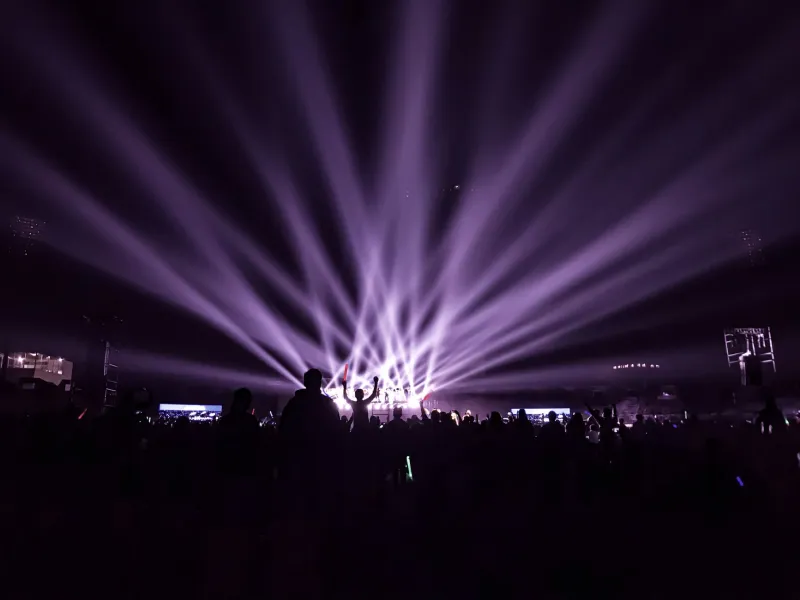
Last summer, during a major festival set in the mid-Atlantic, an artist stepped away from their planned setlist and performed an unreleased track. The crowd lost it. Within four hours, shaky vertical videos were all over social media. By Sunday afternoon, a Star 94 DJ had already flagged it internally. By Tuesday, we were tracking an early streaming version that had surfaced on SoundCloud. By Friday, it was in light rotation.
No press release. No label rollout. No official radio edit.
This is the new speed of music discovery — and it's changing how radio stations operate in real time.
The Festival Floor Is Now a Scouting Report
For Star 94's programming team, major concert weekends aren't just cultural events — they're intelligence operations. DJs and producers are monitoring setlists, social media feeds, and fan forums simultaneously, looking for the moments that break through the noise.
"I've got a system," says one of our afternoon drive DJs, who asked to keep the specifics loose to avoid tipping off competitors. "I follow about forty fan accounts for major artists, a handful of music journalists who actually attend shows, and a couple of Reddit communities that liveblog setlists in real time. By the time a headline act wraps their encore, I usually know what happened."
What they're looking for isn't just crowd energy, though that matters. They're watching for specific signals: a new song that gets performed more than once in a weekend (a strong indicator the artist is testing it for release), a cover or mashup that goes unexpectedly viral, or a moment where an artist brings out an unannounced guest and the combination creates something that feels bigger than either act alone.
The 48-Hour Window
The critical window between a live performance and a potential radio add is roughly 48 hours. That's when social media momentum is peaking, streaming platforms are seeing search spikes, and the cultural conversation is loudest. If a radio station moves within that window, they're part of the moment. If they wait for the official label rollout, they're catching up.
"Labels operate on a timeline that made sense in 2005," says a music industry consultant who works with both major and independent acts. "They want the radio edit, the promotional push, the coordinated release. That takes weeks. But the internet doesn't wait weeks. The conversation happens in real time, and stations that can operate in real time are the ones that feel relevant."
At Star 94, our programming team has developed an informal rapid-response process. When a live moment starts generating significant online traction — measured by a combination of social shares, streaming search volume, and engagement on fan communities — it gets elevated to a group conversation. DJs, producers, and our music director weigh in on whether the moment has legs or whether it's a flash-in-the-pan viral clip that won't translate to actual listener interest.
"Not everything that goes viral works on radio," our music director noted during a recent team meeting. "A clip can get ten million views because it's chaotic or funny or unexpected. That doesn't mean people want to hear it at 7:45 in the morning on their way to work. We're always asking: does this have replay value? Does it hold up outside of the context where it blew up?"
When Live Performances Become Radio Gold
Some of the most memorable additions to Star 94's rotation over the past few years have had their origin stories on a stage, not in a recording studio.
There was the arena tour stop where a pop artist debuted a stripped-down piano version of a track that had previously underperformed on streaming — the live arrangement changed everything about how people heard it, and a repackaged version shot up the charts weeks later. There was the festival set where an EDM producer brought out a vocalist for a collaboration that had never been officially announced, and the resulting audience reaction was so overwhelming that the track was expedited to a formal release within three weeks.
And there are the smaller moments — a rapper freestyling over a beat that later became a single, an indie artist covering a classic song in a way that recontextualizes it for a new generation, a pop star visibly emotional during a performance that makes the song feel more real to everyone watching.
"The live version of a song is often more honest than the album version," says one of Star 94's evening DJs. "You can hear what the song actually means to the artist when they're standing in front of 50,000 people. That authenticity reads on radio in a way that's hard to manufacture."
The Logistics Behind the Magic
It's not all instinct. There's infrastructure behind the scouting process.
Star 94's team uses a combination of social listening tools, streaming platform dashboards, and good old-fashioned human curation to track what's happening at major shows. During peak festival season — which in the US runs roughly from late April through Labor Day weekend — the music team is operating in a heightened state of awareness, with someone always monitoring the major stages even when no one from the station is physically on the ground.
When someone is on the ground, the process accelerates significantly. Having a DJ or producer physically at a festival means real-time reporting, direct conversations with artists and managers, and the kind of gut-level read on crowd energy that no algorithm can replicate.
"You can see a crowd react to something," says one of our DJs who attended three major festivals last year. "And when you see 80,000 people simultaneously lose their minds, you know. You don't need data to tell you that something just happened."
What This Means for You
For Star 94 listeners, the practical upside of all this is pretty simple: you're going to hear things faster.
The gap between a live moment and a radio play is shrinking, and that's genuinely exciting for music fans. It means radio can feel alive again — not just a formatted playlist of songs that have already been everywhere, but a real-time reflection of what's actually happening in music culture right now.
Next time you hear something on Star 94 and think, "wait, how is this already on the radio" — now you know. Somebody was watching the stage very carefully.