The DJ Is the Show Now: How On-Air Personalities Are Saving Radio One Story at a Time
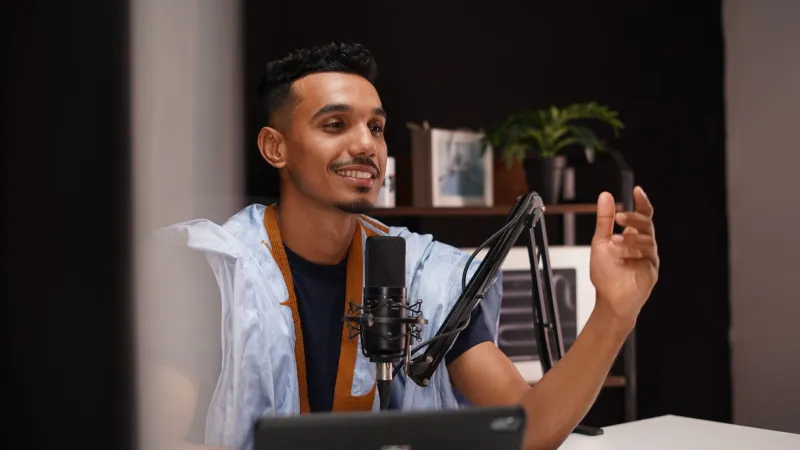
Let's be honest about something. If all you wanted was music, you'd have your playlist running already. You've got Spotify. You've got Apple Music. You've got an algorithm that knows your taste better than most of your friends do.
So why are you still tuning into Star 94?
For a lot of listeners, the answer isn't the songs. It's the people.
The Shift Nobody Saw Coming
For most of radio's history, the music was the product. DJs were important — everyone knew that — but they were essentially connective tissue between the tracks. The song was the reason you stayed. The personality was a bonus.
Something flipped. Quietly, then all at once.
As streaming platforms commoditized music access, radio stations started realizing that the one thing an algorithm genuinely cannot replicate is a real human being having a real moment on air. Spontaneous. Funny. Occasionally awkward. Completely unscripted. That's the thing that makes you keep the radio on in the car even after you've pulled into the parking lot.
"People don't just want music anymore — they can get that anywhere," says one rising on-air personality at a major pop station. "What they want is to feel like they're part of something. Like someone is talking to them, not at them."
That distinction — talking to versus talking at — is everything in modern radio.
What Makes a Radio Personality Stick
The DJs who are building real, lasting audiences right now aren't necessarily the ones with the smoothest delivery or the most polished production. They're the ones who feel like someone you actually know.
At Star 94, that's been a guiding philosophy for a while. Our on-air team isn't just there to read liner notes and introduce tracks. They're telling stories. They're reacting to news. They're sharing opinions about the song that just played. They're occasionally saying something that makes you laugh so hard you nearly miss your exit.
That authenticity is harder to manufacture than it sounds, which is exactly why it's valuable. Listeners are remarkably good at detecting when someone is performing versus when they're being genuine. The DJs who last are the ones who figured out how to be themselves in front of a microphone — which, if you've ever tried it, is genuinely not easy.
Social Media Changed the Game — Again
If the streaming era threatened to make radio personalities irrelevant, social media came along and gave them a second life that nobody predicted.
The best on-air personalities today aren't just radio DJs. They're content creators. They're Instagram presences and TikTok voices and Twitter personalities who happen to also have a morning show. Their audience doesn't clock out when the broadcast ends — they follow the story into the feed, into the comments, into the DMs.
This has fundamentally changed the economics of radio personality. A DJ who can move an audience across multiple platforms is exponentially more valuable than one who only exists between 6 and 10 AM. Advertisers know this. Stations know this. And increasingly, the DJs themselves know this — and are building their brands accordingly.
"My show doesn't stop when I go off air," says one Star 94 on-air personality. "It just moves to a different screen. And honestly, some of my best moments happen there, because I can be even more off-the-cuff."
That cross-platform presence also creates a feedback loop that makes the radio show itself better. Listener interactions on social media generate material. Inside jokes develop. The audience feels invested in the personality in a way that a Spotify playlist simply cannot create.
The Economic Argument
All of this has real financial implications for how radio stations are structured and where they're putting their resources.
For decades, the programming budget debate was largely about music licensing, rotation strategy, and production quality. Increasingly, that conversation is shifting toward talent development and personality investment. Stations that are thriving in the streaming era tend to have strong on-air identities — recognizable, beloved personalities who give listeners a reason to choose live radio over a curated playlist.
The advertising side of the equation reflects this too. Personality-driven endorsements — where a DJ is genuinely recommending a product rather than reading a generic spot — consistently outperform traditional radio ads. Listeners trust the voice they've been listening to for years. That trust is bankable, literally.
For Star 94, it means we're thinking about our on-air team not just as talent, but as brand. Their stories are our story. Their audiences are our audience.
It's Not About Replacing the Music
None of this means the songs don't matter — obviously they do. Star 94 is still a music station, and the rotation still matters enormously. But the framing has evolved.
The music is the backdrop. The personality is the foreground. And when both are working together — when a DJ introduces a track with a story that makes it land differently, or reacts to a song in a way that makes you hear it with fresh ears — that's when radio does something streaming genuinely cannot.
It makes music feel like a shared experience.
That's the thing worth tuning in for. That's what keeps the dial right here.