Two Minutes and Done: How the Streaming Era Rewrote Radio's Unspoken Song Length Rules
The Three-Minute Single Is Having an Identity Crisis
For decades, the three-minute pop song was basically gospel. Radio programmers built their entire day around it. Stations could squeeze in more tracks per hour, listeners got a satisfying chunk of melody without overstaying its welcome, and artists knew exactly what they were working toward in the studio. Three minutes, give or take thirty seconds — that was the deal.
Then streaming happened. Then TikTok happened. And suddenly, two minutes started looking a lot more like the magic number.
According to data from Spotify and Apple Music, the average length of a charting pop song has dropped by nearly forty seconds over the last decade. That might not sound like much, but in radio terms, it's seismic. It's the difference between fitting four songs in a segment and fitting five. It's the difference between a track that holds attention and one that loses it before the second chorus.
So what actually changed? And more importantly — are shorter songs actually better, or are we just training ourselves to need less?
The TikTok Effect Is Real, and It Starts in the Studio
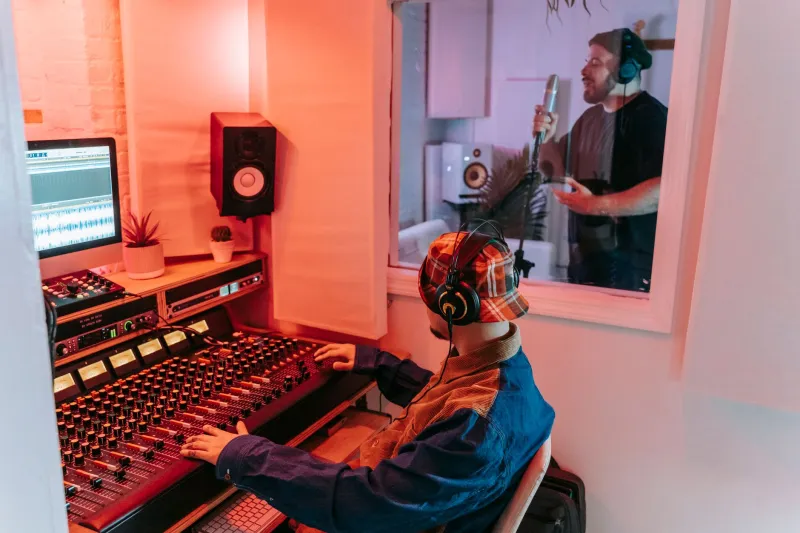
Ask any working music producer right now and they'll tell you the same thing: the conversation about song length starts earlier than it ever used to. Like, way earlier.
"Before we even lay down a full arrangement, there's always a moment where someone in the room asks, 'What's the hook landing at?'" says Marcus T., a pop and R&B producer based out of Atlanta who's worked on several tracks that have made their way into Star 94's rotation. "If the best part of the song isn't hitting by the forty-five-second mark, you're already behind."
That's the TikTok calculus at work. The platform's default video format essentially rewards songs that deliver their most emotionally resonant or sonically interesting moment within the first minute. Producers and artists have internalized this so deeply that it's now reshaping how songs are structured from scratch — not just edited down after the fact.
The result? Intros are getting chopped. Bridges are becoming optional. Some songs are skipping the traditional verse-chorus-verse structure entirely and going straight for the jugular.
What Star 94's DJs Are Actually Noticing On-Air
Here at Star 94, our DJs live inside this shift in real time. They're the ones deciding what gets queued up, what flows into what, and whether a track earns a second spin. And they've got opinions.
"I've noticed that when a song comes in under two-fifteen, it almost feels jarring now," says afternoon drive host DJ Reena. "Like, you're gearing up for the drop and then — it's over. You almost feel cheated, even if the song was great. There's this weird psychological thing where shorter can actually feel less satisfying, even though we're supposedly more impatient than ever."
That tension is real. Listener retention metrics — the data that tells streaming platforms how long someone actually stays with a track before skipping — have pushed artists toward front-loading everything. But radio has always operated on a different emotional contract. When you're driving to work and a song comes on, you're not holding your thumb over a skip button. You're just... in it. And a song that's built to survive a TikTok scroll doesn't always translate to a song that carries you through ten miles of highway.
DJ Reena puts it plainly: "There are tracks I love that I genuinely cannot play back-to-back because they're both two minutes long and the set feels choppy. Radio has a rhythm. Short songs mess with that rhythm if you're not careful."
Shorter Doesn't Mean Worse — But It Doesn't Mean Better Either
Here's where it gets nuanced. Some of the most impactful songs in pop history were under two-and-a-half minutes. "Be My Baby" by The Ronettes clocks in at two-thirty-eight. Early Beatles tracks barely cracked two minutes. Brevity has always had a place in great songwriting.
The difference now is why songs are short. When Phil Spector was producing Wall of Sound records, the length was a byproduct of the craft — every second earned its place. Today, songs are sometimes truncated not because the idea is fully expressed in two minutes, but because an algorithm might penalize a track that takes too long to get interesting.
That's a fundamentally different creative motivation, and listeners — even if they can't articulate it — can often feel it. A song that ends because it's done feels different from a song that ends because someone decided the data said to cut it there.
"I can usually tell," says Star 94 music director Caleb Owens. "There are two-minute songs that feel complete, like a perfect little thing. And then there are two-minute songs that feel like someone hit stop too early. The bones are there but the house never got built."
So Where Does Radio Go From Here?
The honest answer is that radio is adapting, like it always has. Star 94 isn't going to stop playing a great two-minute song just because it doesn't fit the old template. And we're not going to artificially favor longer tracks just to preserve some nostalgic idea of what a pop single should sound like.
What we are doing is paying closer attention to how tracks flow together — building sets that account for the new landscape without letting the algorithm completely run the room. Because at the end of the day, radio is still a human experience. Someone's still choosing what comes next. Someone's still thinking about the listener sitting in traffic or working out or just needing a song to get them through the afternoon.
Shorter songs are here to stay. The question every artist, producer, and programmer is quietly wrestling with is whether the music filling those two minutes is worth your time — or just optimized to take it.